
A guest blog by Dr Emrah Atasoy:
The interdisciplinary panel ‘Narratives of the Future II,’ organised by Dr Emrah Atasoy and generously hosted by IASH, explored how futures are imagined across literary studies, cultural studies, digital education, theology and political theory, and how such narratives shape our understanding of contemporary global challenges. Bringing together three speakers, the panel addressed different approaches to envisioning the future and the ways in which these perspectives influence our interpretations of tomorrow. Drawing on insights from literary studies, digital education, and theology, the discussion highlighted the contributions these fields can make to ongoing debates about the future and the complex issues facing the world today.
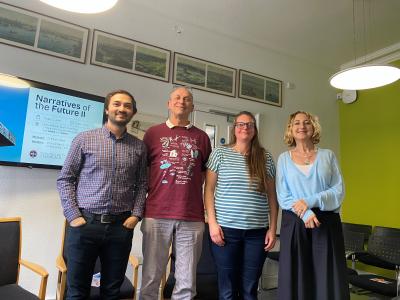
The panel was chaired by Dr Atasoy (current Fellow at IASH, University of Edinburgh), and featured presentations by Professor Siân Bayne (Moray House School of Education and Sport and Edinburgh Futures Institute, University of Edinburgh), Dr Elsa Bouet (English, Edinburgh Napier University), and Professor Dr Volker Stümke (current Fellow at IASH, University of Edinburgh). Professor Bayne addressed the contested futures of education and four techno-imaginaries for the future of education, namely personalisation + automation; brokenness + solutionism; temporal privilege + libertarianism; and techno-determinism + investment. Dr Bouet explored science fiction, utopian narratives, orientalism in SF, globalisation, and imperial diplomacy through close reading of Octavia Butler’s Dawn (1987) and Parable of the Sower (1993). Prof Stümke explored Christian eschatology for modern futures by focusing on its interrelated dual nature and highlighted the importance of modesty. Collectively, the presentations opened an interdisciplinary dialogue on how the future is imagined, interpreted, and represented across literary, cultural, and digital education narratives, and how these visions shape understandings of contemporary global complexities. The panel highlighted the importance of interdisciplinary collaboration, resistance, and hope in addressing today’s multifaceted challenges.
The presentations were followed by a 20-minute tea and coffee break, after which a lively 30-minute Q&A session was held, moderated by Dr Atasoy, with questions from both in-person and online participants.
Image by Dr Emrah Atasoy.