
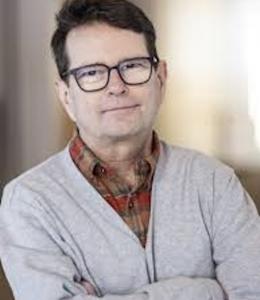
Professor Geoffrey Gorham
American Philosophical Association, June - July 2026
Geoffrey Gorham (Ph.D. U. of Minnesota; M.A. U of Calgary) is Professor of Philosophy at Macalester College, USA, and Resident Fellow at the University of Minnesota Center for Philosophy of Science. He is previously a visiting fellow at the Center for Philosophy of Science, University of Pittsburgh, the Center for History of Philosophy and Science, Radboud University, NL, the Dibner Library of the Smithsonian Libraries, Washington, D.C., and the Rotman Institute of Philosophy, Western University, Canada. His primary interest is the history of early modern natural philosophy and metaphysics. His current research focus is Early American natural philosophy. He is author of Philosophy of Science: A Beginner's Guide, co-editor of The Language of Nature: Reassessing the Mathematization of Natural Philosophy in the Seventeenth Century, and author of numerous articles in journals such as Journal of the History of Philosophy, British Journal for the History of Philosophy, Early Science and Medicine, Canadian Journal of Philosophy, Journal of the History of Ideas, and Studies in the History and Philosophy of Science. Born and raised in Canada, he recently became a dual US-Canadian citizen.
Project title: Cadwallader Colden: A Neglected Scottish-American Nation-Maker
The Scottish-American Cadwallader Colden (1688-1776) is a neglected constitutor of the nation of America, in at least three significant ways:
(i) For many years, Colden was Lieutenant Governor of New York, as well as Surveyor General. Colden was a skillful, even-handed diplomat, especially with the indigenous Iroquois nations, around the Great Lakes, and with the French Canadians to the North;.
(ii) Colden encouraged women scientists, particularly his own daughter, Jane, who is regarded as the first female American natural scientist.
(iii) Colden promulgated a capacious, non-religious scientific attitude in American universities, such as Columbia, where he was influential, thanks to his Connecticut friend, Samuel Johnson.
His own emendations of Newton's Principia were examined, but largely dismissed, and his final words on Newton's system were never published. A staunch Royalist, Colden was on the wrong side of the American Revolution -- coincidentally, he died in 1776, though he was nearly killed at least once leading up to the Revolution.