
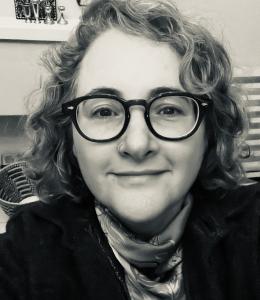
Dr Nechama Brodie
African Fellow, December 2025 - January 2026
Home Institution: University of the Witwatersrand
Dr Nechama Brodie is a veteran South African journalist, academic, and the author of 11 books including three monographs looking at fatal violence and crime. She holds a PhD in Journalism and Media Studies and is a senior lecturer at the Wits Centre for Journalism at the University of the Witwatersrand in Johannesburg where she teaches journalism theory, and runs research programmes building data about homicide and non-natural deaths. She has published widely on femicide in South Africa, collaborating with gender and violence scholars across disciplines and institutions. Nechama works closely with state and multi-national organisations and institutions involved in crime, security, and disaster response, primarily focused on responses to mass fatality events, and has specialist training in forensic and medico-legal processes.
Project title: Necrodata: How we count death and whose deaths count?
At a time of widespread political upheaval, mass production of misinformation and intensifying military conflict across multiple regions, the politics of death – and whose deaths are seen to “count” – have assumed renewed importance and urgency. While the decolonisation project has highlighted inherent and systemic problems with language and epistemologies of mortality, whether the deaths are due to violence or as a result of natural causes (both often connected to systemic failures), there are still many areas and disciplines that remain under-explored, particularly those related to the development, curation, integration and synthesis of data, disciplines, and theoretical frameworks.
In research and practice, death and violence is frequently siloed: either as a public health problem, or a medical pathology, or a theoretical concept, or a socio-political issue. Quantitative scholarship often overlooks contemporary humanities’ knowledge about the problem of violence and death, and what might be done to reduce it; while qualitative approaches often shy away from the counting or reading of numbers and other data, entrenching lacunae in our knowledge. Although there are growing bodies of research within specific schools and fields the integration of disciplines remains constrained, specifically those of demography, mortality, and forensic medical and pathology with violence research stemming from social sciences and humanities traditions. This project looks to innovate a space for integration between the work done “on the body” – for example by forensic pathologists and forensic anthropologists; the work done on “the body” as a site of (contested) biopower and bureaucracy; and in and on corpora or “bodies of work” in literature and the academy.