
Visiting Research Fellow, November 2026 – April 2027
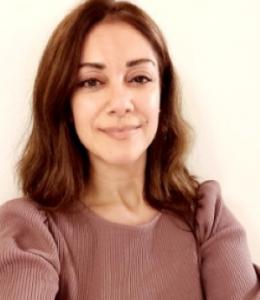
Lina Fadel is Associate Professor in Social Research Methods and Director of the JUST Methods Research Lab in the School of Business, Design and Social Sciences (BDSS) at Heriot-Watt University. She also serves as Associate Dean of the University for Arts, Humanities and Social Sciences. Holding a PhD in Languages and Intercultural Studies, Lina’s interdisciplinary research sits at the intersection of migration, identity and belonging, with a particular focus on anti-colonial scholarship and creative research methodologies. As a migrant academic, her work draws on lived experience to challenge dominant epistemologies and rethink whose knowledge is recognised, valued and legitimised within academia. Lina’s scholarship examines how marginalised communities navigate systems shaped by colonial legacies, while advancing human-centred, creative and justice-oriented approaches to research.
These commitments extend into her creative practice: Lina is a Pushcart Prize-nominated poet and poetry editor at the other side of hope, the UK’s first literary magazine of sanctuary. Across her academic and creative work, she centres voices at the margins and advocates for more equitable and inclusive forms of knowledge production. Public engagement is also integral to Lina’s work. In 2022, her Cabaret of Dangerous Ideas show at the Edinburgh Festival Fringe, ‘Become a Sexy Refugee in 5 Easy Steps’, used performance to challenge harmful narratives about migration and stimulate public debate. Her expertise also led to collaboration with UNHCR UK, contributing to the development of its 2023 Two Truths and a Lie campaign on refugee rights and misinformation. Lina is currently editing a volume for Routledge on disobedient and radical research practices and co-editing a second volume for Multilingual Matters exploring other-stories and counter-mappings of migration, both scheduled for publication in 2027.
Project title: Staying, Speaking, Refusing: Ethics Beyond Compliance in Decolonial Research with Syrian Minority Women Who Remain
My fellowship project explores the ethical, relational and political complexities of conducting research with Syrian women from minority communities who have remained in Syria amid ongoing conflict, persecution and economic precarity. As a Syrian woman based outside Syria, I find myself grappling with difficult questions about proximity, distance, privilege and responsibility. What gives me the right to ask women to share their experiences of violence and loss when I am physically removed from the realities they face? Can shared identity, language and cultural knowledge establish the legitimacy of my research, or must that legitimacy come from the women themselves?
Rather than presuming that research should proceed, I propose a period of ethical suspension: an opportunity to explore whether a larger study should take place and under what conditions it might be meaningful, safe and ethically justified. Drawing on decolonial scholarship and Feminist Participatory Action Research, I approach ethics as an ongoing, relational process shaped by the women themselves. Ultimately, I ask not only how I can conduct this research ethically, but whether I should conduct it at all, and whether the most ethical outcome might be to listen, pause, or not proceed.