
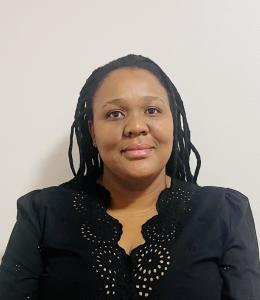
Dr Thatshisiwe Ndlovu
Postdoctoral Fellow, September 2026 - June 2027
Thatshisiwe Ndlovu is a lecturer and Postdoctoral Fellow at the University of the Witwatersrand, where she is based at the Narrative Enquiry for Social Transformation (NEST). She holds a PhD in Development Studies from Wits and has previously held research positions at the Public Affairs Research Institute (PARI) and the Society, Work and Politics Institute (SWOP). Her interdisciplinary research examines violence, memory, gender, subjectivity, and everyday life, with particular interest in how people live with, remember, negotiate, and resist the enduring effects of social and political violence. Her work engages questions of voice, relationality, social justice, widowhood, gendered cultural practices, and the afterlives of apartheid. Her current research extends these concerns to material memory and the archive, exploring how women preserve and transmit histories of the anti-apartheid struggle through domestic belongings and everyday practices of remembrance.
Project Title: Objects That Remember: Women’s Material Memories of the Anti-Apartheid Struggle
As South Africa marks more than three decades of democracy and fifty years since the 1976 uprisings, public memory of the anti-apartheid struggle remains centred on iconic events, political leaders, monuments, museums, and official archives. Such commemorative forms can obscure the intimate and gendered ways in which histories of struggle are preserved and transmitted within ordinary domestic spaces. Focusing on Black women in Orlando West, Soweto, Pretoria, this project examines how memories of apartheid and political struggle are carried through domestic belongings kept, preserved, and passed between generations. It approaches preservation as a form of care: the often-unrecognised labour through which women safeguard objects, narrate their significance, and sustain histories that remain peripheral to institutional archives. Drawing on feminist ethnography, oral history, material and visual methods, and participatory workshops, the project treats domestic objects not simply as illustrations of known historical events, but as intimate archives capable of generating historical knowledge. It contributes to debates on gender, memory, intergenerational transmission, archives, and reparative approaches to South Africa’s contested past.