
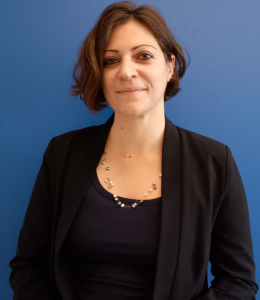
Professor Marta Gravela
Nominated Fellow, April-May 2025
Home institution: University of Turin
Marta Gravela is Associate Professor in Medieval History at the University of Turin, Italy. After obtaining her PhD from the University of Milan in 2015, she worked at the University of Cambridge, Universities of Turin and Milan, CIHAM UMR 5648 and École Normale Supérieure de Lyon. Her research interests focus on social, economic and political history of the late Middle Ages across Northern Italy, France and the Duchy of Savoy, with particular reference to the themes of family and kinship, taxation and citizenship, revolts, and the relationships between princely powers and municipalities, lords and rural/Alpine communities. She is currently the Principal Investigator of the ERC project DEMALPS - Democracies of the Alps. Issues, practices and ideals of politics in mountain communities, 1300-1500, which investigates - from below - practices of political participation and decision-making on a large scale, by scrutinizing the sources produced and preserved by hundreds of communities in the Western Alps, now comprised between France, Italy and Switzerland (demalps.com).
Project title: Communities at the margins? The Western Alps and state formation in the late medieval and early modern period
In the framework of the ERC research objectives, this project investigates the contribution of Alpine communities to the process of state formation which took place in Europe from the 15th century onward, by overcoming the modern perception of mountain areas as marginal. Despite obvious geomorphological and environmental constraints, the Western Alps were actually an area of intense connection rather than a border; communities were not isolated settlements with a unique identity, but often saw the coexistence of different social, linguistic and religious identities. Moreover, the ‘border’ position of the region made it open to cultural and political exchanges and influences with the empire, the kingdom of France and the Italian communal cities and towns. The project will focus on a series of case-studies which witnessed peculiar phenomena of political dynamism and institutional experimentation between the 14th and 16th centuries (the Escartons, Waldensians and Tuchini) in order to analyse them comparatively and explore questions such as the nature of legitimacy of local and superior power; the politics of identity, with particular reference to ‘mixed’ communities in terms of religion and language; the construction of collective memory of political transformations.