
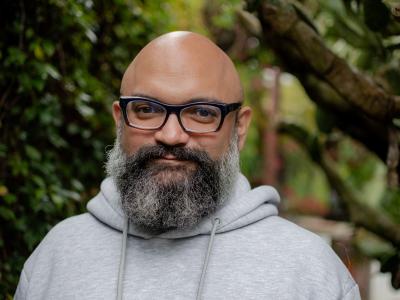
Dr Alejandro Manuel Flores Aguilar is the 2022 CSMCH-IASH Visiting Postdoctoral Fellow in Modern and Contemporary History, working on his project Raised Gaze in Ixil Time: Towards a Minor History of War (1936-2020).
My IASH-CSMCH postdoctoral project aims at producing decolonising multimedia knowledge, building upon memorial repertoires of Maya-Ixil former guerrillas, from the northwestern highlands of Guatemala. This is the continuation of transdisciplinary research carried out in collaboration with the Ixil-University and the Ixil Ancestral Authorities since 2015. My project originally got the support of the Wenner-Gren Foundation’s Fejos Postdoctoral Fellowship in Ethnographic Film, for the fieldwork period between 2020 and 2021. The result of the current phase will be to create the virtual infrastructure for archiving multimedia materials obtained during field research, as well as to prepare an edited volume about visual culture in Latin America, highlighting the clash of geopolitics with local struggles in the context of the Cold War.
A number of Ixil researchers have taken part in the reconstruction process of memory repertoires in their own communities. This epistemic practice builds upon the idea that Ixiles are not only subjects of study, but active producers of historic discourse (the minor history) that debate and dispute hegemonic metanarratives tending to flatten their local experience (the major history). This research highlights how binaries such as victims/victimisers can be constructively problematised, by paying attention to indigenous participation in local expressions of the larger Cold War geopolitical hermeneutics.
In the aftermath of the counterinsurgent war and the genocide against the Maya-Ixil people, most relevant historiographical and anthropological research focuses on human rights violations and the mechanisms implemented by the state to oppress and persecute civilians. This line of research has been fundamental to support the victims of state violence during transitional justice trials. However, with some exceptions, there has been a lack of understanding of indigenous resistance, and its relevance in both local and national political history. The recovery of these—Maya-Ixil former guerrillas— repertoires of memory adds a relevant perspective to the debate around contemporary history of the Cold War not only in Guatemala, but also in the rest of Latin America.
Links: