
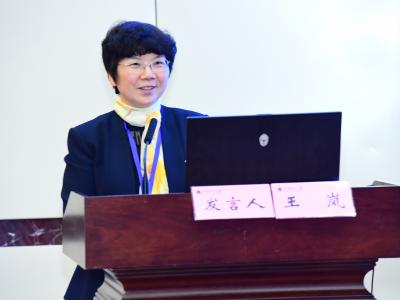
An IASH Work-in-Progress seminar, delivered by Professor Wang Lan (Visiting Research Fellow, 2025)
From Religious Rituals to Humanistic Drama: a Comparative Study of Early Chinese and English Theatrical Development
Responding to Hans-Thies Lehmann’s claims for a post-dramatic theatre, Greg Walker suggests insightfully that we should also think about a pre-theatrical drama, existing in late medieval England and Scotland, and that the post-dramatic and the pre-theatrical have much in common in their radical approaches to stagecraft. Pre-theatrical drama is deeply related to the early public life of different areas and deserves more attention. Despite differences in culture and mature forms of drama, Chinese and British drama share some fundamental similarities in the trajectory of their early development, which might be described roughly as arising from religious or sacrificial rituals to sophisticated secular theatre. Religious rituals, such as Nuoji (傩祭) in China and Mass in Britain, contributed much to the initial phase of their pre-theatrical drama in subject matter, non-dedicated performance spaces and fluid audience interaction. Chinese drama evolved from Nuoji to Nuoxi (傩戏), then secularized in Canjunxi (参军戏) which was either humorous or satirical, culminating in the mature dramatic theatre of Kunqu (昆曲) which is regarded as the fountainhead of various Chinese operas, including Peking Opera with its stylized role types and humanistic stories. English drama developed from liturgy to the more complicated Mysteries, Miracles, Morality plays, Interludes, climaxing in the legendary Renaissance drama represented by Shakespeare’s tragedies embracing secular humanism.
Although Kunqu and British Renaissance drama differ in cultural soil and forms of expression, they constitute distinct yet equally integral stages within theatre history. To fully grasp the diversity and rich historical dimensions of theatrical art, we need to go back to the "pre-theatrical" practices in different cultures and evaluate their achievements with an eye on their connection to "post-dramatic theatre."
Please join in-person, or click the link below to join the webinar:
https://ed-ac-uk.zoom.us/j/81113670095
Passcode: 38bakW8E