
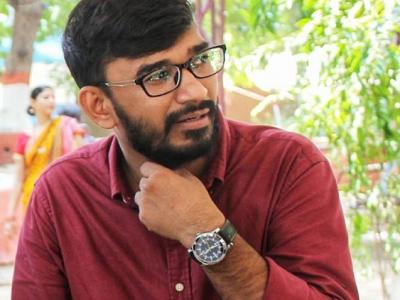
Dr Umesh Kumar: Landscapes of ‘Honour’: Contextualising the Literary Response to ‘Honour Killings’ through Translation
Abstract
The issue of killing young couples for izzat or honour is a contentious and complex one, which over the years has become an endemic problem in Indian society. Whatever little study that exists around the phenomenon is undertaken within the social sciences or critical historiography.
Through this work-in-progress talk, I examine some popular Hindi and English literary works that are centered on the socio-cultural practice of ‘honour killing’ in the Indian context. Foregrounding this ‘new’ material with a comparative lens –I argue that creative writers, writing in Hindi, have spoken to and about ‘honour killings’ in a much more nuanced way than their English counterparts. I contend that Hindi writings are much more radical and wide-ranging. Hindi writing has another advantage: it does not suffer from the anxiety of establishing its ‘Indian-ness’- unlike Indian writings in English. On the contrary, it is much freer, rooted, subversive and has the necessary vocabulary to flesh out the local contours. It is intriguing to note that in Hindi the problem of honour is not only constructed but also deconstructed at the same time. This Hindi literary treatment of gender-based violence calls for an equally nuanced translation into English in order to build a stronger consensus against the rampage of gendered violence(s).
Through my own translations, I argue for the construction of a new set of idioms, patterns, and terms of references in English to investigate the phenomenon of ‘honour killing’. Though not without limitations, I will read out select extracts from these ‘committed’ translations so as to replicate and catch that subversive spirit of the regional. In the process, I aim to display how the Hindi writers re-appropriate the role and actions of women characters not merely as victims of honour-based violence but also –as agents of ‘response’ to the repressive patriarchal ethos.
[Institute for Advanced Studies in the Humanities Work in Progress talk]