
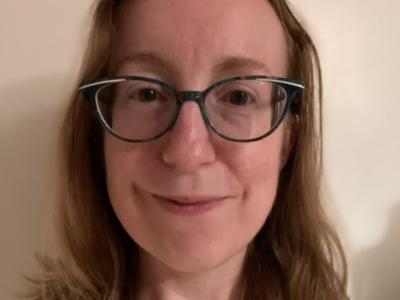
An IASH Work-in-Progress seminar, delivered by Dr Katherine Inglis (IASH Sabbatical Fellow, 2026)
The Part and the Whole: Obscenity, Quotation, and Problems of Reading
This work in progress talk will introduce a motley company of literary and religious anthological texts that were implicated in British and American obscenity cases in the second half of the nineteenth century. These anthological texts ripped bawdy and sexual quotations from their sources and patched them together with provocative commentaries, some in service of anti-censorship arguments, some arguing against tolerance of the source texts. At a time when the operation and ambit of obscenity law was not yet settled, the hybrid form of these indicted texts created problems of method and interpretation. How should one read and evaluate the obscenity of such a collage of quotations? Could potentially obscene quotations be inscribed in indictments and repeated in court? Would a finding of obscenity imply that the original text, even the Bible, even the works of Shakespeare, was obscene? What was the relationship between the excerpt and the text, the part and the whole, when reaching aesthetic or legal judgments?
The talk will not be a retelling of the familiar story of literature’s triumph over artistic censorship in the twentieth century; rather, I propose to review certain early, uncelebrated and flawed attempts to establish the principle that the work should be judged as a whole, a principle that is explicitly articulated in modern Anglo-American obscenity law, as well as being a convention of modern literary criticism. If these nineteenth-century legal and aesthetic arguments for the organic unity of the text anticipate modern reading protocols, then the legal reasoning that condemned them describes an alternative reading practice in which the part is a legitimate proxy for the whole, and even a text in itself. That mode of reading and reasoning would go on to be applied to texts that were not anthological in form and so, I argue, these curious texts and the literary arguments they provoked had a lasting impact on obscenity law and literature.
Chasing fragments, excerpts, and extracts through the archive of obscenity history, this talk excavates a historic mode of 'reading' that was partly undone in twentieth-century obscenity case law and statute, yet, I suggest, remains active in our present moment, particularly in machine-assisted evaluations of the potential obscenity of texts.
Meeting ID: 384 971 962 716 1
Passcode: nV6Rg79e