
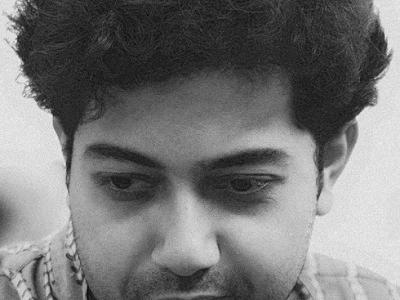
An IASH Work-in-Progress seminar, delivered by Dr Arka Chattopadhyay (Charles Wallace India Trust Fellow 2023; Indian Institute of Technology Gandhinagar)
Bengali Modernisms: Toward an Avant-Garde ‘World-Form’
How does an aesthetic form travel from one literary tradition to another, cutting across different parts of the world and constructing another world in its formalization? This paper focuses on the late 20th century and early 21st century developments in experimental Indian-Bengali literature to trace an avant-garde ‘world form’ that connects Bengali Modernisms with global Modernisms. Taking the cue from Eric Bulson’s argument on little magazine as ‘world form’ and Sophie Seita’s work on provisional networks of the avant-garde, the paper analyzes citational and tropological possibilities of migrating literary form as adaptation and appropriation in avant-garde Bengali writers of the little magazine—Nabarun Bhattacharya and Subimal Misra. Problematizing Parul Mukherji’s point about the absence of the avant-garde in Indian Modernism, I argue for a political avant-garde in Bengali Modernism that rekindles the old question about the political or apolitical nature of Modernism from Lukács and Williams to Bürger and Murphy. The paper identifies the nature of narrative experiment that makes and unmakes forms to produce a political comment and follows up on its implications for Bengali and global Modernist studies. Going through Nabarun’s materialist aesthetics of the literary form as an event of explosion, I pinpoint the function of formal plasticity in his works to approach the transnational, if not planetary, textual constellations in his short stories. Kondratiev’s theory of long waves offers a political image of ‘world form’ in a referential movement in one story while the scraps of WTC in a Punjab factory incarnate a material movement of ‘world form’ in another. From this we come to his novella Lubdhak (Sirius, 2006) and the problem of false and unverifiable citations as sites of formal plasticity. In Misra’s ‘anti-novels’, I examine the politicization of the ‘cut up’ as a ‘world form’ when it negotiates its own fluid materiality of structural change as well as an explicitly engaged thematics. Studying his take on European Modernists like Joyce and Kafka, we look at Misra’s radical use of the ‘cut up’ in his anti-novel, Premer Mora Jole Dobe Na (Love’s Corpse Never Drowns, 2010) that combines a subversive set of narratologically unstable, multi-versional tales from Purana and Mahabharata with multilingual newspaper cuttings on a political rape, that happened in the wake of a genocide in Bengal. The paper thus situates these illustrations of narrative formalization as worlding to frame a Bengali Modernist avant-gardism of formal change that interpenetrates socio-political change.
Click the link below to join the webinar:
https://ed-ac-uk.zoom.us/j/86535202023
Passcode: Vr8f3ew2