
Fri 27 February, 18:00-20:00 at Inspace, 1 Crichton St, EH8 9AB
£10/Ticketed: https://inspace.ed.ac.uk/ecstatic-visions-album-launch/
Concert Programme:
ANGÉLICA NEGRÓN: Letras para cantar (2019)
ALISTAIR MACDONALD: Ecstatic Visions (2023)
WENDE BARTLEY: Ellipsis (1988)
ERIC CHASALOW: The Fury of Beautiful Bones (1984)
ROBERT LAIDLOW: Post-Singularity Songs (2023-24)
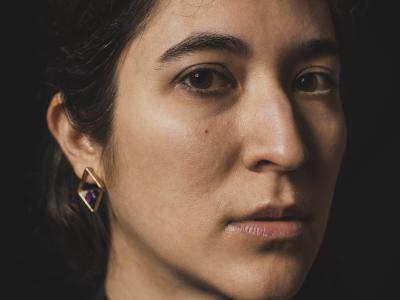
Singing worlds into existence, from medieval mystics to AI oracles, Ecstatic Visions offers a shining gateway into other realms. The five transcendental works on the album forge a deep connection between IASH alumna Dr Stephanie Lamprea’s visceral vocal presence and the live electronics of composer Alistair MacDonald, playing with how the voice is embodied or liberated by technology. Sourcing texts from 12th-century mystic Hildegard von Bingen and proto-feminist poet Juana Inés de la Cruz to AI-generated narratives, the album places historical visionaries and modern technology side by side as sacred oracles.
The album’s program is a curated exploration of feminine vocality, technology, and creation myths. It includes:
• Angélica Negrón’s atmospheric 'Letras para cantar', a sensual setting of poetry by 17th century nun from New Spain, Juana Inés de la Cruz.
• Alistair MacDonald’s immersive 'Ecstatic Visions', commissioned for the Glasgow Cathedral Festival. It forges Lamprea’s voice with the sound of the cathedral’s great bell and Hildegard von Bingen’s writings on gemstones and visions, creating a series of kaleidoscopic, multi-channel illusions.
• Wende Bartley’s 'Ellipsis' maps the three phases of the moon (waxing, full, and waning), in association with three archetypes of woman(virgin, mother, and crone).
• Eric Chasalow’s 'The Fury of Beautiful Bones', a powerful setting of Anne Sexton’s raw confessional poetry, where the electronic part stretches the voice into impossible, resonant shapes.
• Robert Laidlow’s 'Post-Singularity Songs', a monodrama featuring a creation myth co-authored with ChatGPT. The work blends Laidlow’s writing with poetry by Emily Dickinson and John Donne, and text from a specially created poetry-generating AI, exploring themes of dust, death, and free will in a digital universe.
Stephanie says, "At the heart of this album is the question of where the ‘self’ resides when the voice—the most embodied instrument—is transformed by circuitry. Collaborating with Alistair, we treated all sound as a physical entity. Whether singing Hildegard’s chants, or becoming a vessel for an AI’s creation myth, the goal was to find a profound, often political, connection and authenticity."