September 2016

Computational Mind Reading Group

Event date: 
Tuesday 15 November 2016 to Wednesday 16 November 2016
Time: 
13:00
Location: 
1.01 DSB

This semester, we are returning to Russell and Norvig's Artificial Intelligence: A Modern Approach (3rd Edition).

Last time, we did the first part of the book, plus chapters 13-15 on Bayesian inference and Bayes nets. This time we are moving on to making decisions and integrating desires with Bayesian inference. We start with Chapter 16 ('Making Simple Decisions') and work forwards. We will progress to chapters on learning, neural nets, and RL.

A preview of the book is here: http://d.pr/11BOc

Computational Mind Reading Group

Event date: 
Tuesday 1 November 2016 to Wednesday 2 November 2016
Time: 
13:00
Location: 
1.01 DSB

This semester, we are returning to Russell and Norvig's Artificial Intelligence: A Modern Approach (3rd Edition).

Last time, we did the first part of the book, plus chapters 13-15 on Bayesian inference and Bayes nets. This time we are moving on to making decisions and integrating desires with Bayesian inference. We start with Chapter 16 ('Making Simple Decisions') and work forwards. We will progress to chapters on learning, neural nets, and RL.

A preview of the book is here: http://d.pr/11BOc
Computational Mind Reading Group

Event date: 
Tuesday 18 October 2016 to Wednesday 19 October 2016
Time: 
13:00
Location: 
1.01 DSB

This semester, we are returning to Russell and Norvig's Artificial Intelligence: A Modern Approach (3rd Edition).

Last time, we did the first part of the book, plus chapters 13-15 on Bayesian inference and Bayes nets. This time we are moving on to making decisions and integrating desires with Bayesian inference. We start with Chapter 16 ('Making Simple Decisions') and work forwards. We will progress to chapters on learning, neural nets, and RL.

A preview of the book is here: http://d.pr/11BOc
Computational Mind Reading Group

Event date: 
Tuesday 4 October 2016 to Wednesday 5 October 2016
Time: 
13:00
Location: 
1.01 DSB

This semester, we are returning to Russell and Norvig's Artificial Intelligence: A Modern Approach (3rd Edition).

Last time, we did the first part of the book, plus chapters 13-15 on Bayesian inference and Bayes nets. This time we are moving on to making decisions and integrating desires with Bayesian inference. We start with Chapter 16 ('Making Simple Decisions') and work forwards. We will progress to chapters on learning, neural nets, and RL.

A preview of the book is here: http://d.pr/11BOc

Computational Mind Reading Group

Event date: 
Tuesday 20 September 2016 to Wednesday 21 September 2016
Time: 
13:00
Location: 
1.01 DSB

This semester, we are returning to Russell and Norvig's Artificial Intelligence: A Modern Approach (3rd Edition).

Last time, we did the first part of the book, plus chapters 13-15 on Bayesian inference and Bayes nets. This time we are moving on to making decisions and integrating desires with Bayesian inference. We start with Chapter 16 ('Making Simple Decisions') and work forwards. We will progress to chapters on learning, neural nets, and RL.

A preview of the book is here: http://d.pr/11BOc

Terry Regier: Semantic typology and the Sapir-Whorf hypothesis in computational perspective

Event date: 
Friday 30 September 2016 to Saturday 1 October 2016
Time: 
11:00
Location: 
Informatics Forum 10 Crichton Street

SPEAKER:      Terry Regier

DATE:             Friday 30 September 2016

TIME:             11.00 in IF 4.31/4.33

Informatics Forum

10 Crichton Street

Semantic typology and the Sapir-Whorf hypothesis in computational perspective

Saints and Sinners: Literary Footprints of Mary and Margaret, Queens of Scots

Event date: 
Thursday 6 October 2016 to Friday 7 October 2016
Location: 
Institute for Advanced Studies in the Humanities, 2 Hope Park Square, EH8 9NW

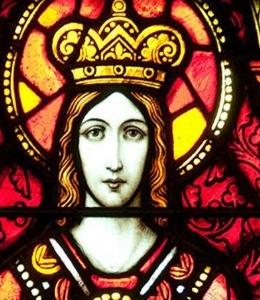
This conference will focus on the two most famous Queens of Scots, St Margaret (d.1093) and Mary (d. 1587), exploring how female threat is represented and – potentially – neutralised in literature and visual culture across the medieval period. To date, little serious academic study of Margaret has been undertaken, and further study into Mary beyond her infamy and demise has been limited.